If you’ve ever felt like SEO and marketing are two separate worlds, you’re not imagining it. A lot of teams do SEO like it’s a technical chore, then do “marketing” like it’s social posts and ads, and somehow they hope the website magically turns into a lead machine.
The reality is way simpler (and way more effective): SEO is one part of marketing. Marketing is the bigger system that creates demand, builds trust, and moves people toward a decision.
The American Marketing Association defines marketing as the activity and processes for creating, communicating, delivering, and exchanging offerings that have value for customers and society.
Google frames SEO as “taking the next step” to improve your site’s presence in Search, building on the basics that make you eligible to show up.
So if you want results that actually stick, you don’t “do SEO” and “do marketing.” You build one connected engine.
Image placements and alt text for this post
1) SEO reporting visual (Search Console style)
Use this near the “Measure and iterate” section. Alt text: Search performance report showing clicks and impressions over time.
2) Content calendar template
Use this near the “Content system” section. Alt text: Content marketing calendar template used to plan posts by week.
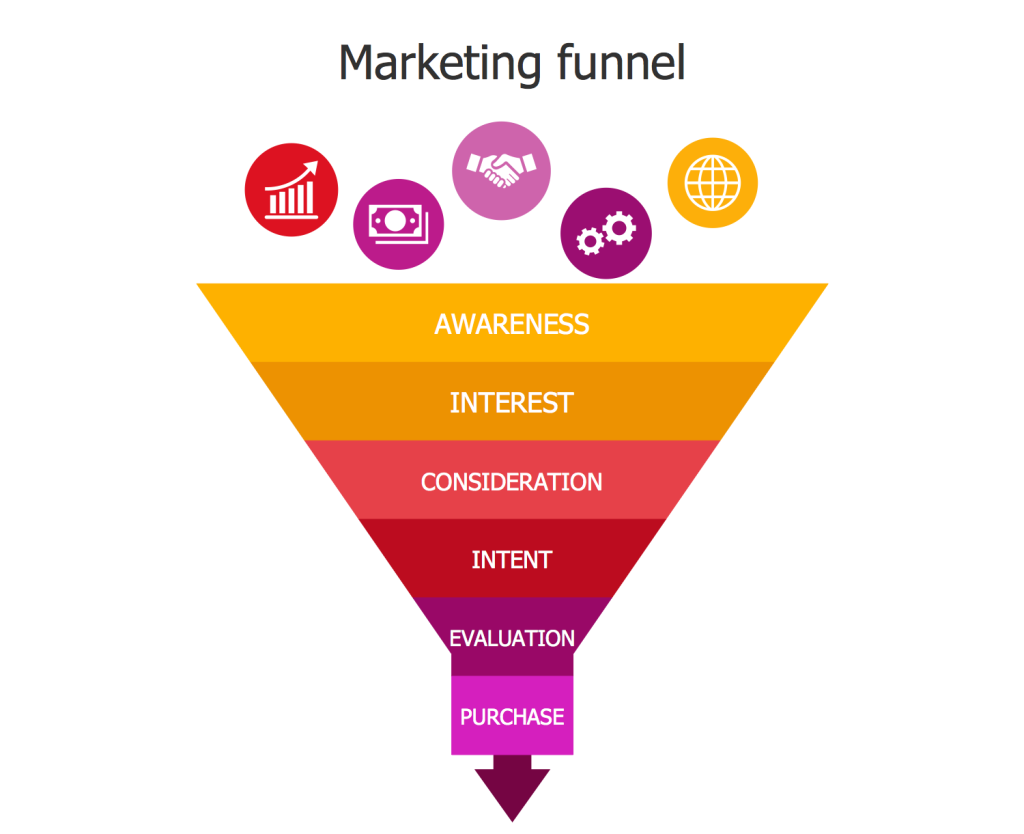
3) Marketing funnel diagram
Use this near the “Map intent to the journey” section. Alt text: Marketing funnel showing awareness to purchase stages.
4) Analytics dashboard visual (GA4 style)
Use this near the “Track what matters” section. Alt text: Traffic acquisition dashboard showing channels and trends.
First, the honest difference between SEO and marketing
Marketing is the full system.
Marketing includes positioning, messaging, offers, trust-building, distribution channels, and measurement. It’s everything that makes someone aware of you, interested in you, and confident enough to buy, book, donate, or contact. That aligns with the AMA definition because it’s not just promotion, it’s creating and delivering value in a way people accept and act on.
SEO is mostly demand capture.
SEO shines when people are already searching for something and you show up with the best answer. The goal is not “rank for keywords,” it’s “be present when the right person is looking, and make it easy for them to choose you.” Google’s SEO guidance basically supports this idea: help search engines crawl, index, and understand your pages, then improve your presence with practical best practices.
Marketing also creates demand, not just captures it.
This is where many sites get stuck. If you only rely on SEO, you’re waiting for people to search. Marketing adds the other half: content, social, email, partnerships, and campaigns that put you in front of people earlier. Inbound marketing is built around attracting, engaging, and delighting customers through valuable content and relationship-building.
The SEO + Marketing loop that actually works
Here’s the loop I like because it’s practical and repeatable: Foundation → Intent → Content → Distribution → Conversion → Measurement → Improvement. Each step supports the next one, so you stop doing random tasks and start building momentum.
1) Foundation: make your site easy to crawl, understand, and trust
This is the “boring” part that quietly decides whether everything else will work.
Google Search works by crawling pages, then indexing them by processing content and key elements like titles and alt attributes. If your site is messy, slow, or confusing for crawlers, you are basically marketing with the parking brake on.
Also, page experience matters more than people think. INP replaced FID as the Core Web Vitals responsiveness metric (and Search Console shifted accordingly), which is a nice reminder that “fast and responsive” is not optional anymore.
What to do here (in plain English): clean structure, clear internal links, no indexing accidents, mobile-friendly layouts, and performance that does not feel heavy.
2) Intent: understand what people want at each stage
A keyword is not just a word. It’s a person trying to do something.
Some searches are awareness (they’re learning). Some are consideration (they’re comparing). Some are decision (they’re ready). Your job is to match pages to those moments, not cram everything into one “Services” page and hope it works.
A good marketing funnel visual helps here because it forces you to admit that people do not start at “buy now,” they start at “do I even trust you?”
3) Content: create pages that satisfy intent, not pages that look busy
This is where SEO and marketing overlap the hardest, because content is both a ranking asset and a persuasion asset.
Google explicitly pushes a people-first approach: create helpful, reliable content that benefits people, not content made primarily to manipulate rankings. If your content is vague, padded, or written for bots, it tends to age badly.
Here’s a content system that works without burning you out:
Pillar pages.
These are your main “money” pages that cover a core topic deeply, like “Web Design in Augusta” or “Brand Design for Nonprofits” or “Managed WordPress Security.” A pillar page should feel like the best single destination on that topic, with clear sections, proof, FAQs, and a strong call to action.
Support articles.
These are narrower posts that answer specific questions people search, like pricing, comparisons, best tools, how-to guides, and common mistakes. They should link back to the relevant pillar page so the whole site starts to feel organized, not scattered.
Case studies and proof content.
This is marketing gold and SEO fuel. People search for outcomes, examples, and “can you do this for someone like me?” A solid case study builds trust fast, improves conversions, and often earns natural links because it’s real evidence.
Content calendar.
A calendar is not corporate busywork, it’s how you stop posting randomly. It helps you balance content types (awareness vs decision), keep consistency, and avoid the “post 6 times in one week then disappear for 2 months” pattern.
4) Distribution: give your content a life outside Google
This is the step most “SEO-only” strategies forget, and it’s a huge reason growth stays slow.
Social distribution.
Social does not need to go viral to be useful. It can simply keep you visible and familiar, especially for service businesses. Post your best insights, your process, your results, and your opinions (carefully), then link back to your site when it makes sense.
Email distribution.
Email is still one of the best channels because you own it. Even a small list is powerful if it’s the right audience. Use email to send helpful posts, offers, updates, and “here’s what we learned” content that keeps people warm.
Partnership distribution.
Partnerships are underrated. Guest posts, podcast interviews, local business collaborations, and niche communities can drive qualified traffic and high-quality backlinks naturally. This is the clean version of link building that does not feel spammy.
Paid distribution (smart, not sloppy).
Paid ads can speed up learning. You can test messaging, offers, and landing pages quickly, then bring what works back into your SEO content strategy. Paid does not replace SEO, it helps you iterate faster.
5) Conversion: turn traffic into action with clear UX
This is where marketing and UX shake hands.
Marketing increases perceived value. UX reduces interaction cost, meaning the mental and physical effort it takes users to complete a task. If your site gets traffic but does not convert, it’s usually because users are doing too much work to understand, trust, or act.
Focus on: clear headline, proof near the top, simple navigation, strong CTA, fast load, and forms that do not feel like a punishment.
6) Measurement: track the signals that actually matter
You do not need 47 dashboards. You need a few consistent signals.
Search Console signals (SEO health).
Watch impressions, clicks, average position, and query trends. If impressions are rising but clicks are flat, your titles and snippets may not be compelling. If clicks are rising but conversions are flat, that’s a marketing and UX issue, not an SEO issue. Search Console exists specifically to help you understand how your site appears and performs in Google Search.
Analytics signals (marketing performance).
Watch traffic sources, landing pages, and conversions by channel. The goal is to see which pages bring qualified visitors and what they do next. A traffic acquisition style dashboard helps you spot where growth is coming from and where it is leaking.
Conversion signals (business reality).
Track leads, calls, bookings, purchases, email signups, and contact form completions. Traffic feels nice, but conversions keep the lights on.
7) Improvement: update, link, refine, and repeat
This is where compounding happens.
Update content.
Refreshing old posts is often faster than creating new ones. Improve clarity, add missing sections, update screenshots, and tighten the match to search intent.
Strengthen internal links.
Google uses links to find new pages and understand relevance, and they recommend crawlable links and better anchor text that makes sense to users and search engines.
This is the easiest “SEO upgrade” that also improves user navigation.
Improve technical issues over time.
Performance, mobile usability, and responsiveness are never “done.” Treat them like routine maintenance, not a one-time repair. INP being a Core Web Vitals metric is one more reason to keep speed and interaction quality on your radar.
A simple 30-day SEO & Marketing plan you can actually follow
Week 1: Fix the foundation and tracking.
Set up Search Console, confirm indexing basics, and make sure your most important pages are crawlable and fast enough to not frustrate users. This week is about removing invisible blockers that sabotage everything later.
Week 2: Map intent and build your content plan.
Pick 1 to 2 pillar topics that match your core services, then list the real questions customers ask before they buy. Turn that into a simple calendar so you know what you’re publishing and why.
Week 3: Publish one pillar page and two support posts.
Go deep on the pillar page and make it genuinely useful. Then publish support posts that answer specific questions and link them back to the pillar with descriptive internal anchors.
Week 4: Distribute and improve conversions.
Share the content through social and email, reach out to one partner for a collaboration opportunity, and improve the landing page experience so traffic becomes leads. Marketing value plus UX clarity is the combo that moves numbers.
The big takeaway (that most people miss)
SEO without marketing gives you slow growth and weak conversions. Marketing without SEO makes you pay forever for attention. Together, they create a loop where content ranks, distribution accelerates it, trust builds, conversions improve, and performance data tells you what to do next.
If you want, tell me what your business is (agency services, local service, nonprofit, ecommerce) and your target location if any, and I’ll turn this into a tailored SEO + marketing strategy with:
- pillar page topics,
- 20 blog post ideas grouped by funnel stage,
- a simple content calendar,
- and a conversion checklist for your main landing pages.